
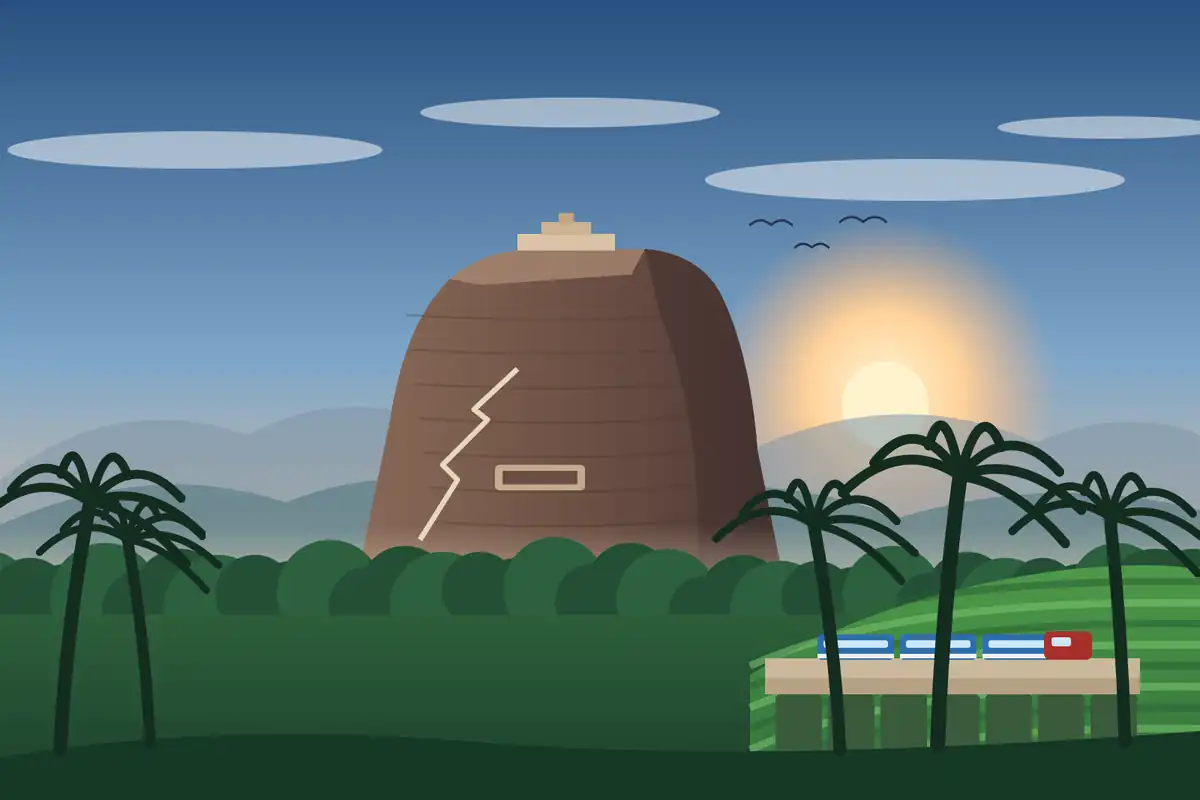
Sri Lanka at a glance
Sri Lanka is a teardrop-shaped island in the Indian Ocean, separated from the southern tip of India by the narrow Palk Strait. It is small enough to cross in a day on paper, yet it packs in ancient cities, tea-covered mountains, national parks with wild elephants, and long beaches on three sides. For many travellers from India and the Gulf it is one of the easiest first trips abroad: the flights are short, the food will feel familiar, and the traffic keeps to the left.
The short answer on timing is that it depends on where you are going. December to March is the classic season for the west and south coasts, the hill country and the ancient cities. April to September is better for the east coast. If you want one month that works for most of a typical loop, February is hard to beat.
Best time to visit Sri Lanka: two monsoons, two seasons
Because the island sits between two wind systems, one coast is almost always in good weather. Locals call the seasons by the wind that drives them.
- The south-west monsoon arrives around May and lasts until about September. It drenches the west and south coasts and the central hills, and the sea turns rough enough that swimming off many beaches becomes unsafe.
- The north-east monsoon runs from roughly October to January. It rains mainly on the north and east, while the west and south begin to dry out and settle down.
- The inter-monsoon months, around March–April and October–November, are hot and humid, with clear mornings and heavy thunderstorms later in the day.
| Region | Best months | What to expect the rest of the year |
|---|---|---|
| West and south coast (Colombo, Bentota, Galle, Mirissa) | December–March | Rough seas and frequent rain from May to September; red flags on many beaches |
| East coast (Trincomalee, Pasikudah, Arugam Bay) | Roughly May–September | Wetter and windier from October to January |
| Hill country (Kandy, Nuwara Eliya, Ella) | January–March, drier and clearer | Cool, misty and wet spells at any time, with the heaviest rain in the monsoon months |
| Ancient cities (Anuradhapura, Polonnaruwa, Sigiriya, Dambulla) | February–September, but start early | Very hot by midday; the dry zone can see heavy rain from October to January |
Heavy rain in the hills can cause landslides and road closures, and flooding is possible on the lowlands, so check the warnings from the Department of Meteorology in the days before you travel and leave a spare day at both ends of a mountain leg. Our month-by-month planner shows how Sri Lanka's seasons line up against the other destinations on Tripsya if you are comparing trips.
Seasonal highlights worth planning around
- Whale watching: boat trips off the south coast and from Trincomalee run during their own seasons, usually in the drier months for each coast. Choose a reputable boat and confirm the season locally.
- Elephants: Udawalawe is known for sightings through most of the year, while the dry-season gatherings in the dry zone draw the biggest herds. Wildlife parks can close for short periods, so check the Department of Wildlife Conservation before you book a safari.
- Festivals: the Kandy Esala Perahera, a long procession in the hill capital, usually falls in July or August around the full moon and brings crowds and higher demand for rooms. Vesak in May and the Sinhala and Tamil New Year in mid-April are national holidays, when transport fills up.
- Poya days: every full moon is a public holiday with a quieter, more religious feel; expect busy temples and restrictions on alcohol sales.
Getting to Sri Lanka
Almost every international flight lands at Bandaranaike International Airport (CMB), at Katunayake, north of Colombo. A second international airport near Hambantota in the south has limited service. From India, direct flights connect several major cities and the Kerala airports, and the hop from Kochi or Thiruvananthapuram is short, so a long weekend is realistic. From the Gulf, direct flights are also available, but schedules change by season, so check the carrier's current timetable.
Entry rules, including electronic travel authorisation and fees, have changed several times in recent years and differ by passport. Do not rely on a blog, including this one; check the Department of Immigration and Emigration and your own government's travel advice shortly before you book.
A 10-day route that follows the weather
Distances look short on the map, but winding roads and heavy traffic make every transfer slow, so build your plan around a handful of bases rather than a new town each night.
Days 1–3: the ancient cities
Head inland to the cultural heartland. Sigiriya, the rock fortress rising straight from the plain, is best climbed at opening time before the heat builds. Nearby you can see the cave temples of Dambulla and the ruined royal cities of Polonnaruwa and Anuradhapura, all UNESCO-listed. Hiring a bicycle at Polonnaruwa works well because the sites are spread over a flat area.
Days 4–5: Kandy
Kandy sits around a lake in the hills and is home to the Temple of the Tooth, one of the most important Buddhist sites on the island. Plan your visit around one of the daily rituals, dress modestly and go early to avoid the largest crowds on Poya days. The botanical gardens outside town are a calm place to spend the following morning.
Days 6–7: tea country and the train
Take the scenic railway through the highlands towards Nuwara Eliya and Ella. Reserved seats on the most popular services are often booked well ahead, so arrange your ticket through official channels as early as your dates are fixed. If you are used to the tea hills of Kerala, the landscapes will remind you of our Munnar guide, but the terraces here climb higher and the air is noticeably cooler.
Day 8: a safari
Descend to Udawalawe or Yala for an early or late drive. Go with a licensed jeep driver, keep your voice down and never leave the vehicle except at designated spots. Leopards and elephants are the headline sightings, though birdlife often steals the day.
Days 9–10: the south coast
Finish on the beaches between Galle and Mirissa during the dry season. The old Dutch fort at Galle is a pleasant walk at sunset, and the surf and whale-watching towns further east are relaxed places to unwind before the airport transfer. Allow plenty of time for the return journey, because the expressway is quicker than the old coastal road but traffic near Colombo can slow it.
Practical tips
- Dress and behaviour: at any temple or shrine, cover shoulders and knees and remove shoes and hats. Never pose for a photo with your back to a Buddha statue, and ask before photographing monks.
- Getting around: trains are a highlight but slow; a car with a driver is the most flexible choice for the cultural triangle and the hills. Traffic keeps to the left, as in India.
- Health and sun: bring repellent, a hat and refillable water bottles. The lowlands are hot and humid year-round, and the hills can turn cold at night. Our packing list builder will help you balance both climates in one bag.
- Beaches: obey the lifeguards' flags and avoid swimming in the monsoon months on the west and south coasts. Rip currents are a real risk.
- Food: rice and curry, hoppers and string hoppers are easy to enjoy as a vegetarian, and many places will adapt the spice level on request.
Responsible travel
Keep a respectful distance from wild elephants and other animals, avoid any attraction that offers rides or close contact with them, and do not buy items made from shell, coral or ivory. In the hills, stick to marked paths through tea estates and always ask before photographing workers.
Pair it with
If you are travelling from southern India, Sri Lanka combines easily with a Kerala itinerary: start with the water and greenery of Alappuzha or our backwaters houseboat guide, then fly across for the cultural and hill sections. For a beach-only comparison, see how monsoons shape the seasons in our Boracay travel guide and our Varkala guide.
Official sources
- Sri Lanka Tourism (national tourism board)
- Department of Meteorology, Sri Lanka (forecasts and warnings)
- Department of Wildlife Conservation (national parks)
- Department of Immigration and Emigration (entry rules)
Frequently asked questions
What is the best month to visit Sri Lanka?
There is no single best month, because the island has two monsoons. December to March is the most reliable window for the west and south coasts, the hill country and the cultural sites, while April to September suits the east coast. If you can only travel once, February is a strong all-round choice.
When is the rainy season in Sri Lanka?
The south-west monsoon brings rain to the west, south and hill country from roughly May to September, and the north-east monsoon brings rain to the north and east from about October to January. March–April and October–November are inter-monsoon months with hot mornings and thunderstorms in the afternoon.
How many days do you need in Sri Lanka?
Seven days covers a compact loop of the cultural sites, Kandy and the hills. Ten days lets you add a safari and a few nights on the south coast without rushing, because the roads are slow and distances take longer than the map suggests.
Can you visit the east coast and the south coast on the same trip?
You can, but they have opposite seasons, so one of them will be out of its best weather. In the shoulder months around April and October both are workable, otherwise choose the coast that matches your dates.
Do you need to dress modestly in Sri Lanka?
At temples and other religious sites, yes: cover your shoulders and knees, and take off your shoes and hat before you enter. Carry a light scarf or shirt for this, since beachwear is not appropriate away from the sand.