Why Yellowstone is different from other parks
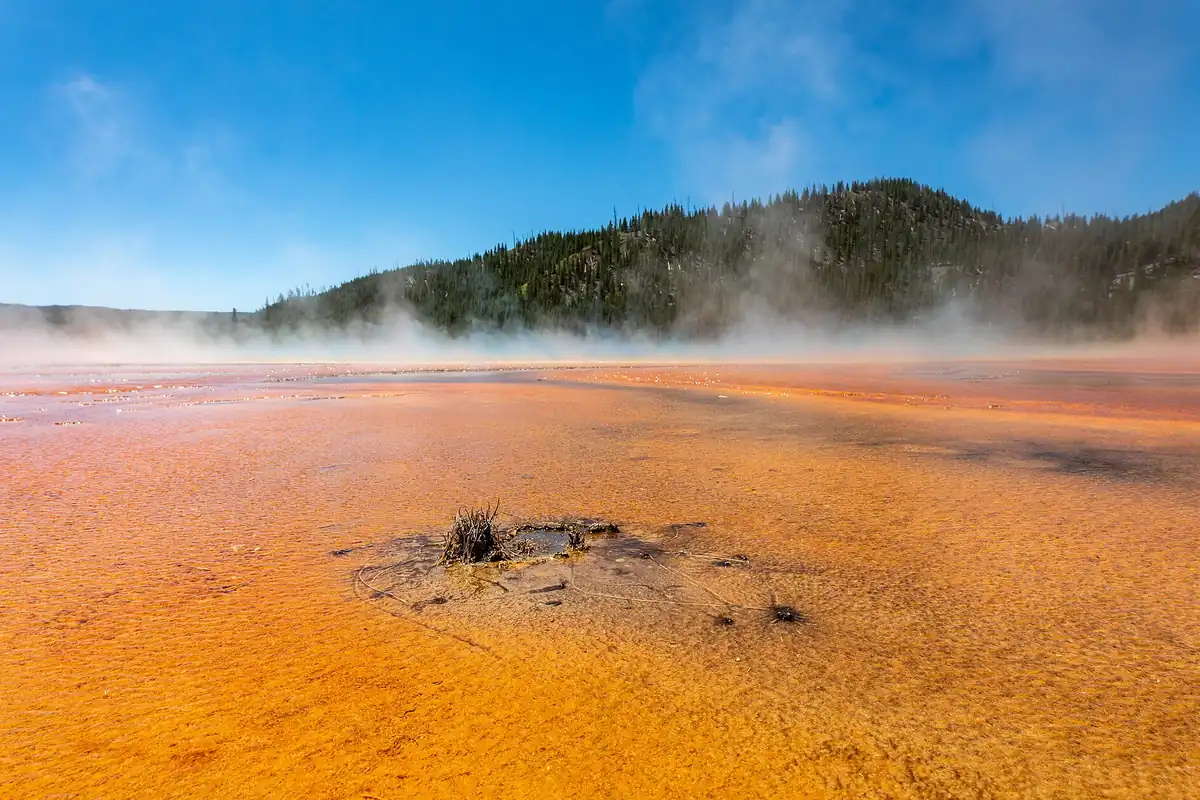
Yellowstone sits on a high volcanic plateau where north-western Wyoming meets Montana and Idaho. Created in 1872, it was the first national park in the United States and is widely regarded as the first in the world. UNESCO added it to the World Heritage List in 1978. Beneath the park lies one of the largest active volcanic systems on Earth, and its heat drives the greatest concentration of geysers, hot springs, mud pots and steam vents found anywhere.
That is only half the picture. Yellowstone is also one of the best places in the lower 48 states to watch large wild animals: bison, elk, pronghorn, grizzly and black bears, and wolves, which were reintroduced in the mid-1990s. Add a deep yellow-walled canyon with two large waterfalls, a huge high-altitude lake and miles of forest and meadow, and you have a park that rewards several days rather than a quick pass through.
Best time to visit
Yellowstone's season is defined by snow. Most of the park lies above 2,000 metres, and winter is long. Our best time to visit guide explains how this compares with other destinations.
- Late April to May: roads open in stages and some facilities are still closed. Snow lingers, but wildlife is active, with bison calves appearing and bears emerging.
- June: nearly everything is open, waterfalls are full with snowmelt and the meadows turn green. One of the best months.
- July and August: warmest and most reliable weather, but also the busiest time. Parking at the famous geyser areas fills by mid-morning, and afternoon thunderstorms are common.
- September: cooler, calmer, and the elk rut fills the valleys with bugling. Our other favourite month.
- October to early November: services close and the first snow can shut high passes at short notice.
- Mid-November to mid-December, and March to mid-April: transition periods when most roads are closed to all but limited traffic.
- Mid-December to early March: the winter season. Interior roads are open only to guided over-snow vehicles, while the northern road through Lamar Valley stays open for cars and offers good wolf watching.
Snow can fall in any month at higher elevations. Always check the official road status page before driving between areas.
Getting there and choosing an entrance
The park has five entrances, and choosing the right one saves hours of driving:
- West Entrance (West Yellowstone, Montana): closest to the geyser basins, including Old Faithful and Grand Prismatic Spring.
- North Entrance (Gardiner, Montana): leads to Mammoth Hot Springs and, via the northern road, to Lamar Valley.
- Northeast Entrance (Cooke City, Montana): remote, beautiful and best for wildlife in Lamar Valley.
- East Entrance (towards Cody, Wyoming): crosses a high pass with views over Yellowstone Lake.
- South Entrance: connects directly with Grand Teton National Park and the town of Jackson.
The most convenient airports are Bozeman (BZN) in Montana, Jackson Hole (JAC) and Cody (COD) in Wyoming, and the small seasonal airport at West Yellowstone (WYS). Larger hubs such as Salt Lake City are a long but common drive away. Public transport inside the park is very limited, so most visitors rent a car.
If you are travelling from India: there are no short routes, so expect to connect through a major US or international hub and then take a domestic flight towards Montana or Wyoming. Visa requirements and interview waiting times should be checked on the official US Department of State website well in advance. Vegetarian food is available in park restaurants and gateway towns, but choices are limited in remote areas, so a cooler bag with your own supplies is useful.
Entry passes and reservations
Entry is by vehicle or individual pass, valid for several consecutive days, and annual passes covering many US federal parks are also sold. Campgrounds and in-park lodging book up many months ahead for summer. Rules, fees and any reservation systems are updated regularly, so check the current details on the National Park Service website before you go.
How long to spend, with a three-day plan
The main road through the park is a figure-of-eight loop, and distances look shorter on the map than they feel with wildlife traffic jams and slow mountain sections. Plan for three days as a minimum.
Day 1: the geyser basins
Start at Old Faithful, which erupts at fairly regular intervals; the visitor centre posts predicted times. Walk the boardwalks of the Upper Geyser Basin, then drive north to Grand Prismatic Spring in Midway Geyser Basin. The short Fairy Falls trail leads to an overlook with the best view of the spring's colours. Finish at Norris Geyser Basin if you have energy left.
Day 2: canyon and lake
Spend the morning at the Grand Canyon of the Yellowstone, where viewpoints on the north and south rims overlook the Lower Falls. In the afternoon, drive through Hayden Valley, a reliable area for bison, and continue to Yellowstone Lake and the West Thumb Geyser Basin on its shore.
Day 3: Mammoth and Lamar Valley
Leave before dawn for Lamar Valley, where the early hours offer the best chance of wolves and bears; a pair of binoculars or a spotting scope helps a lot. Return via the terraces of Mammoth Hot Springs in the afternoon.
Practical tips and safety
- Stay on boardwalks: the ground in thermal areas can be a thin crust over scalding water. People are seriously injured every year by leaving the paths.
- Keep your distance from wildlife: the park sets minimum distances from bears and wolves and from other large animals, including bison and elk. Bison injure more visitors than any other animal. Never approach for a photo.
- Bear safety: hike in groups, make noise on trails and carry bear spray, knowing how to use it.
- Altitude and weather: the high elevation makes some people breathless at first. Bring layers and rain gear even in summer.
- Fuel and connectivity: fill up when you can, and download offline maps, because mobile coverage is patchy.
- Drones: flying drones in US national parks is prohibited.
For layering, rain gear and a day-pack checklist, see our packing list.
Where to base yourself
Staying inside the park cuts driving time, and lodges and campgrounds are spread around the loop near Old Faithful, Canyon, the lake, Mammoth and elsewhere. Outside the park, West Yellowstone is the most practical town for the geyser basins, Gardiner works well for Mammoth and Lamar Valley, and Cody and Jackson suit travellers coming from the east or from Grand Teton. Splitting your stay between two bases, west and north, is a good way to reduce long daily drives.
Respectful and responsible travel
Pack out all rubbish, never throw coins or objects into hot springs, which damages them, and keep food stored securely away from animals. When you stop for wildlife, pull fully off the road rather than blocking traffic. Yellowstone's lands have been home to many Native American peoples for thousands of years, and the park's exhibits are a good place to learn about that longer history.
Pair it with
Grand Teton National Park lies directly south and is easy to add. For a longer American West road trip, continue to the Grand Canyon, or compare Yellowstone's wildlife with the great herds of Serengeti National Park.
Official sources
Check these before you go: entry rules, opening days and fees are published here and change from time to time.
- Yellowstone National Park (US National Park Service)
- Current road status and conditions (NPS)
- UNESCO World Heritage listing
- US visa information (US Department of State)
Book your trip to Yellowstone National Park
Affiliate links. If you book through these partner links, Tripsya may earn a commission at no extra cost to you. Partners never see or shape our guides. How this works.
Or go straight to a partner:
- Hotels in West YellowstoneBooking.com ↗
- Flights to Bozeman (BZN)Aviasales ↗
- Car hire at Bozeman airportDiscoverCars ↗
- Airport transfers in the USAKiwitaxi ↗
- United States eSIMAiralo ↗
- Travel insurance for this tripVisitorsCoverage ↗
Hotel and flight searches open for 15 June 2027 to 20 June 2027, in the best season from this guide. Change the dates on the partner site.
Live partner search, loaded only when you choose one:
Frequently asked questions
How many days do you need in Yellowstone?
Three full days cover the main geyser basins, the Grand Canyon of the Yellowstone and a wildlife drive. Four or five days give you time for hikes, Lamar Valley at dawn and fewer hours in the car each day.
When are Yellowstone's roads open?
Most park roads open to cars in stages from about late April to late May and close in early November. The road between the North Entrance at Gardiner and Cooke City usually stays open all year, weather permitting. Check the official road status page before travel.
What is the best month to visit Yellowstone?
June and September are often the best balance, with all main roads open, active wildlife and fewer visitors than in July and August. Weather can still swing quickly in both months.
Which entrance to Yellowstone should I use?
Use the West Entrance for the geyser basins, the North Entrance for Mammoth Hot Springs and Lamar Valley, and the South Entrance if you are coming from Grand Teton National Park. The East and Northeast entrances are scenic but further from the main sights.
Can you visit Yellowstone in winter?
Yes, but most roads are closed to private cars and the interior is reached by guided snowcoach or snowmobile tours. The northern road to Lamar Valley remains a good winter wildlife drive.
Planning tools: compare months for every destination in the best time to visit planner, sketch a multi-stop route in the trip planner and build a checklist with the packing list builder.