Why Santorini is different from other Greek islands
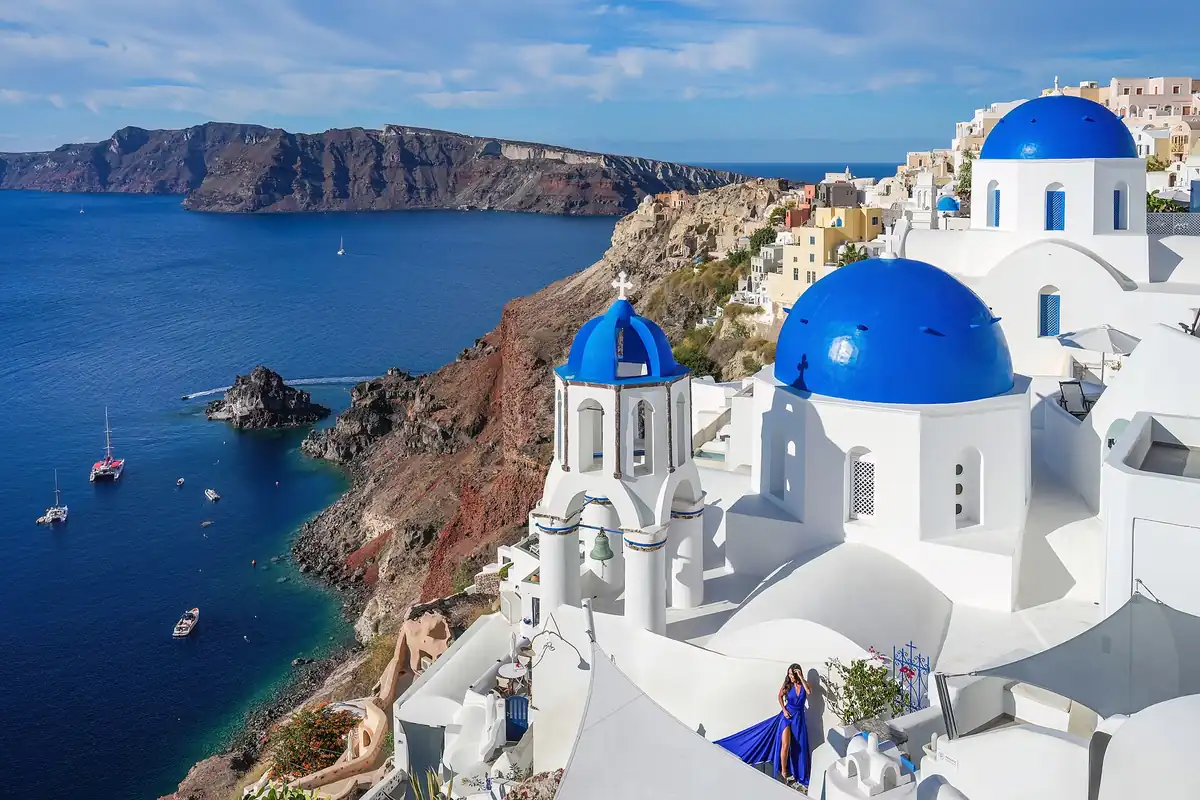
Santorini, also called Thera, is the southernmost of the main Cyclades islands in the Aegean Sea. What makes it unusual is its shape. The island is the broken rim of a volcano: a huge eruption in the Late Bronze Age collapsed the centre into the sea, leaving a crescent of cliffs around a flooded caldera. White and pastel villages sit along the top of those cliffs, looking down on the water and the small volcanic islets in the middle.
That geology shapes everything about a visit. The western caldera side is all dramatic views and steep drops; the eastern and southern sides slope gently down to dark volcanic beaches and vineyards. The same eruption buried the Bronze Age town of Akrotiri under ash, preserving multi-storey buildings that you can walk among today. Santorini is very popular and can feel overrun at peak times, but with sensible timing it is still one of the most striking places in the Mediterranean.
Best time to visit
- May–June: warm, mostly dry and green from the spring, with long evenings. The sea is still cool early in the season.
- July–August: hot, sunny and the busiest by far, with cruise ships adding day crowds in the caldera villages. The strong summer wind, known as the meltemi, can make ferry crossings rough.
- September–October: often the sweet spot, with warm sea, softer light and fewer people after the school holidays.
- April and November: shoulder months. Many places are open but the weather is less settled.
- December–March: quiet, cooler and often windy, with many restaurants and places to stay closed and fewer ferries. Fine for a calm look at the villages, not for a beach trip.
For a comparison with other destinations, see our best time to visit guide.
Getting there
By air
Santorini airport (JTR) is on the east side of the island, a short drive from Fira. There are frequent domestic flights from Athens year-round and direct seasonal flights from many European cities in summer.
By ferry
Ferries run from Piraeus and Rafina, the ports near Athens, as well as from Crete and other Cycladic islands such as Naxos, Paros, Ios and Mykonos. Fast boats take a few hours; conventional ferries take longer but are steadier in wind. Most ferries arrive at Athinios, the port below the cliffs, connected to the towns by a zigzag road with buses and taxis. Schedules change by season, so check close to your travel date.
If you are travelling from India: most routes connect through a Gulf or European hub into Athens, then onward by domestic flight or ferry. Greece is in the Schengen area; check the visa rules on the European Commission's official page and the website of the Greek embassy or consulate that serves your area. Vegetarian food is straightforward: Greek cooking has many vegetable dishes, and Santorini is known for its fava (a yellow split-pea purée) and small sweet tomatoes.
How long to spend and a sample plan
Three to four days is a good length. Fewer, and you will spend much of your time in transit; more, and you can slow down to beach days and wine tastings.
A three-day outline
- Day 1, the caldera rim: walk the clifftop path from Fira through Firostefani to Imerovigli, with views across the caldera all the way. Fit walkers can continue to Oia, roughly 10 km in total, with some climbs and exposed sections. Start early; there is little shade.
- Day 2, history: visit the excavated Bronze Age town of Akrotiri in the morning, then the museums in Fira, where finds from the site are displayed. In the afternoon, explore the hill village of Pyrgos or drive up to the site of Ancient Thera on the Mesa Vouno ridge.
- Day 3, water: take a boat trip into the caldera to the volcanic islet of Nea Kameni and nearby hot springs, or spend a slow day on the black-sand beaches of Kamari or Perissa.
Tickets and entry
Santorini is an island, not a single attraction, so there is no general entry ticket. Archaeological sites such as Akrotiri and Ancient Thera are run by the Greek Ministry of Culture, with separate tickets and seasonal opening hours; check the current fee and times through official sources before you go, especially in winter, when hours are shorter. Boat trips, wine tastings and similar experiences are booked privately; choose licensed operators.
Practical tips
- Steps everywhere: the caldera villages are built on cliffs, so expect many steps, steep lanes and slippery marble paving. Comfortable shoes are essential.
- Sun and wind: the island is very exposed. Bring sunscreen, a hat and a light layer for windy evenings.
- Sunset crowds: Oia's sunset viewpoints fill up well in advance in summer. Imerovigli, the rim path or a quieter spot in Pyrgos can be more relaxed alternatives.
- Getting around: the public bus network centres on Fira. Car or quad hire gives more freedom, but roads are narrow and parking in the caldera villages is very limited.
- Beaches: some beaches sit below unstable cliffs and can be closed because of rockfall risk. Respect signs and barriers.
- Water: tap water on the island is generally not used for drinking; most visitors buy bottled water or use refill points where available.
- Accessibility: the caldera villages are hard to navigate with limited mobility. Flatter areas such as Kamari and Perissa are easier.
Check our packing list for a general checklist for summer island trips.
Where to base yourself
Fira, the main town, has the most choice, the bus hub and lively evenings, plus caldera views. Firostefani and Imerovigli, a short walk north, are quieter while keeping the view. Oia, at the northern tip, is the most photographed village and peaceful in the early morning, but crowded at sunset. Pyrgos, inland, is a traditional hill village with fewer visitors. On the coast, Kamari and Perissa suit beach-focused trips and families, with flatter streets and easier access to the sea.
Respectful and responsible travel
Santorini's small permanent population hosts very large numbers of visitors, and pressure on water, roads and space is real. Visit the caldera villages early or late rather than at midday when cruise passengers arrive, and walk or use the bus where you can. Do not climb onto private rooftops, terraces or church domes for photos; many of the famous white-and-blue scenes are people's homes. Between the old port and Fira, choose the cable car or the steps on foot rather than riding a donkey, as concerns about the animals' welfare are well documented. Keep to marked paths on the rim, where erosion is a problem, and carry your rubbish back with you.
Pair it with
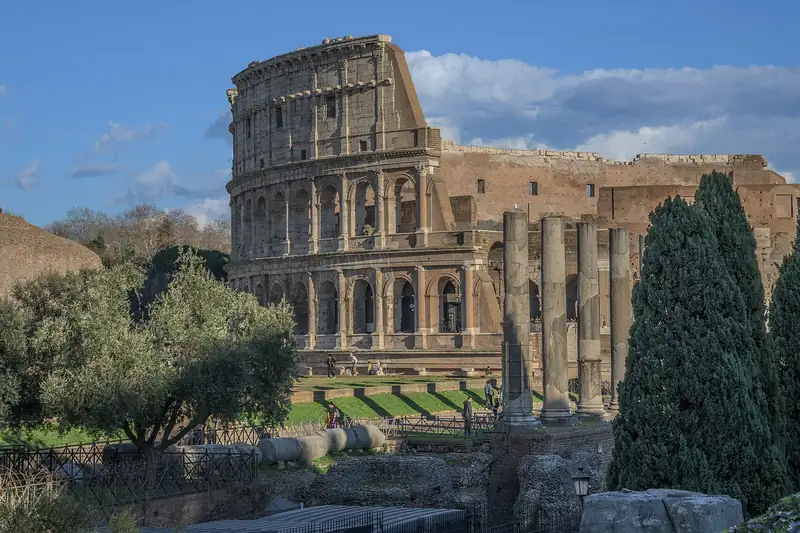
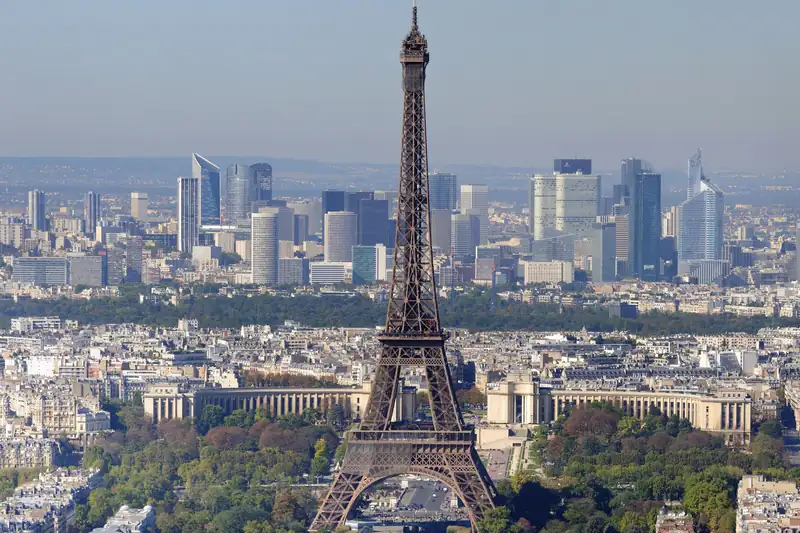
A trip to Greece pairs naturally with ancient history elsewhere in the Mediterranean: the Colosseum in Rome is a short flight away. If you are flying in through Paris, a couple of days at the Eiffel Tower and along the Seine make an easy city counterpoint to island life.
Official sources
Check these before you go: entry rules, opening days and fees are published here and change from time to time.
- Visit Greece (Greek National Tourism Organisation): Santorini
- European Commission: Schengen visa policy
Book your trip to Santorini
Affiliate links. If you book through these partner links, Tripsya may earn a commission at no extra cost to you. Partners never see or shape our guides. How this works.
Or go straight to a partner:
- Hotels in SantoriniBooking.com ↗
- Flights to Santorini (JTR)Aviasales ↗
- Tickets and tours: SantoriniTiqets ↗
- Car hire at Santorini airportDiscoverCars ↗
- Airport transfers in GreeceKiwitaxi ↗
- Greece eSIMAiralo ↗
- Travel insurance for this tripVisitorsCoverage ↗
- Local car hire on SantoriniLocalrent ↗
Hotel and flight searches open for 15 May 2027 to 19 May 2027, in the best season from this guide. Change the dates on the partner site.
Live partner search, loaded only when you choose one:
Frequently asked questions
What is the best month to visit Santorini?
May, June, September and October offer warm weather with fewer crowds than July and August. Many businesses close or reduce hours from late autumn to early spring.
How many days do you need in Santorini?
Three to four days lets you see the caldera villages, walk part of the rim trail, visit Akrotiri and spend time on a beach without rushing.
How do you get to Santorini?
You can fly to Santorini's airport directly from some European cities or via Athens, or take a ferry from Piraeus or Rafina near Athens, or from Crete and other Cycladic islands.
Which is better to stay in, Fira or Oia?
Fira is the island's main town with the best transport links and the most choice. Oia is quieter in the mornings and famous for sunsets but becomes very crowded in the evening.
Can you swim in Santorini?
Yes. The beaches on the east and south coasts, such as Kamari and Perissa, have dark volcanic sand and pebbles. Swimming inside the caldera is possible on boat trips.
Planning tools: compare months for every destination in the best time to visit planner, sketch a multi-stop route in the trip planner and build a checklist with the packing list builder.